
What a bill of lading is: receipt, contract and title in one document
The paper that says who owns a cargo at sea, from the Hague Rules to the electronic version
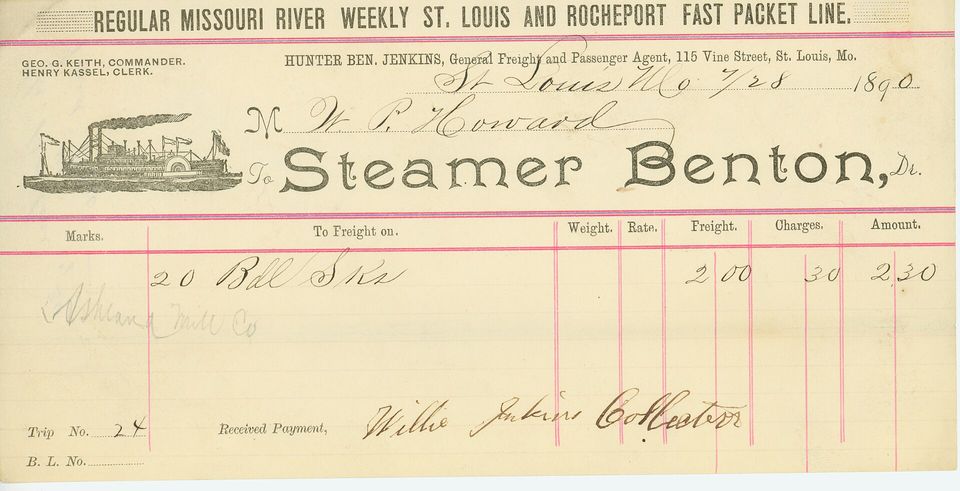
A bill of lading is issued by a carrier when goods are loaded and is surrendered to collect them. Between those moments it can be sold, pledged to a bank and argued over in court. What the document does, the conventions that govern it, and why it is still mostly paper.
Key points
- A bill of lading is at once a receipt for goods loaded, evidence of the contract of carriage and, when made out to order, a document of title.
- The Hague-Visby Rules, the Hague Rules of 1924 as amended by the Visby protocol of 1968, govern most of the world's liner trade.
- Banks paying under a letter of credit require a clean bill of lading under the International Chamber of Commerce's UCP 600 rules.
- The UK's Electronic Trade Documents Act 2023 gave an electronic trade document the same legal effect as its paper equivalent.
- Members of the Digital Container Shipping Association have committed to issuing only electronic bills of lading by 2030.
A bill of lading is the document a shipping line issues when it takes goods on board. English law and the international conventions give it three functions at once: it is a receipt for the cargo, evidence of the contract of carriage and, when made out to order, a document of title.
It is a receipt: it records what was loaded, in what apparent condition, on what date. It is evidence of the contract of carriage: its printed terms say what the carrier has undertaken and on what conditions. And it is a document of title: whoever holds the original, properly endorsed, is entitled to the goods at the port of discharge, and the carrier who delivers without collecting it does so at its own risk. That third function is what allows a cargo to be sold while it is at sea and to serve as security for the letter of credit that financed it.
The conventions
The carrier's liability under a bill of lading is set by treaty. The Hague Rules of 1924, amended by the Visby protocol of 1968 into the Hague-Visby Rules, govern most of the world's liner trade: they require the carrier to exercise due diligence to make the ship seaworthy and to care for the cargo, list the exceptions under which it escapes liability, and cap what it must pay per package or per kilogram. The United Kingdom applies them through the Carriage of Goods by Sea Act 1971 and gives the holder of the bill the right to sue under the Carriage of Goods by Sea Act 1992. The UN's Hamburg Rules of 1978 and Rotterdam Rules of 2008 were meant to replace them; the first has a small membership and the second has not entered into force.
What does the front of a bill of lading show?
The face of the bill names the shipper, the consignee or the words to order, the notify party, the vessel, the ports of loading and discharge, and the description of the goods as declared by the shipper, usually with the carrier's qualification that it has not checked the contents of a sealed container. A clean bill carries no notation that the goods were damaged when received; banks paying under a letter of credit require one, under the International Chamber of Commerce's UCP 600 rules. The number of originals, traditionally three, is printed, and the first one presented cancels the others.
The sea waybill and the electronic bill
Where nobody needs to sell the goods in transit, carriers issue a sea waybill instead: a receipt and contract but not a document of title, released against identity rather than against a paper. For the negotiable bill, the industry has spent two decades trying to replace couriered originals with an electronic record that the law will treat as possession. The Digital Container Shipping Association, whose members are the largest container lines, has published a standard for the electronic bill and its members have committed to issuing only electronic bills by 2030. The United Kingdom's Electronic Trade Documents Act 2023 gave an electronic trade document the same legal effect as its paper equivalent, a change the Law Commission recommended after finding that English law, which governs most bills, could not otherwise recognise possession of a digital file.
Why it matters to the economy
A bill of lading is the point at which the physical trade and the financial trade meet: the letter of credit, the marine insurance and the sale contract all reference it. Delays in producing it hold ships at the berth; fraud around it, forged originals or delivery against an indemnity, is a recurring subject of the P&I clubs' circulars. The paper, or its electronic successor, is the trade.
Frequently asked questions
What is the difference between a bill of lading and a sea waybill?
A sea waybill is a receipt and a contract but not a document of title. It is released against the consignee's identity rather than against a paper original, and carriers issue it where nobody needs to sell the goods while they are in transit.
Why is a bill of lading called a document of title?
When it is made out to order, whoever holds the original, properly endorsed, is entitled to the goods at the port of discharge. That is what allows a cargo to be sold while it is at sea and to serve as security for the letter of credit that financed it.
Are electronic bills of lading legally valid?
In the United Kingdom, the Electronic Trade Documents Act 2023 gave an electronic trade document the same legal effect as its paper equivalent, after the Law Commission found that English law, which governs most bills, could not otherwise recognise possession of a digital file.