
What a bond yield is, and why it rises when the bond's price falls
The coupon is fixed; the price is not; the yield is the arithmetic between them
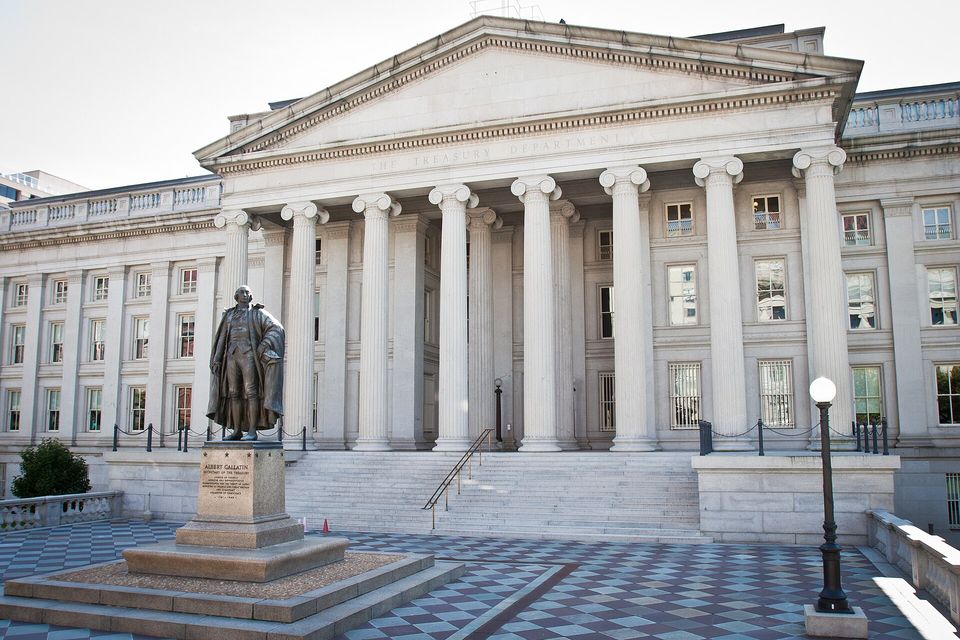
A bond promises fixed payments. Its yield is the return an investor gets for buying those payments at today's price, which is why a higher price means a lower yield. This is how the calculation works, and how the world's largest borrower sells its debt.
Key points
- A bond's coupon and repayment are fixed at issue; its yield is the return implied by the price a buyer pays today.
- Yield to maturity is the single discount rate that makes all remaining coupons and the final repayment worth exactly today's price.
- US Treasury auctions are single-price: every successful bidder pays the price corresponding to the highest accepted yield.
- Treasury bills run up to 52 weeks and pay no coupon; notes run from two to ten years, and bonds twenty and thirty years.
- The New York Fed's model treats an inverted curve, with three-month yields above ten-year yields, as a signal of recession risk.
A bond is a loan cut into tradeable pieces, and its yield is the return that today's price implies: the interest rate at which the bond's future payments, discounted back to now, equal what it costs. Pay less than face value and the same coupons deliver a higher return, so the yield rises; pay more and it falls.
The borrower, a government or a company, promises to pay a fixed coupon at fixed dates and to repay the face value at maturity. Those promises do not change after issue. What changes is the price a buyer will pay for them.
Three numbers that are easy to confuse
The coupon rate is the fixed annual payment as a percentage of face value; a 4 per cent coupon on a 100 bond pays 4 a year. The current yield is the coupon divided by the market price, a rough figure. The yield to maturity is the one markets quote: the single discount rate that makes all remaining coupons plus the final repayment worth exactly today's price. It assumes the bond is held to the end. When a newspaper says the ten-year yield rose, it means the price of ten-year government bonds fell so that new buyers earn more.
How does a government sell its bonds?
The United States Treasury sells its marketable debt through regular auctions run by the Federal Reserve Bank of New York as fiscal agent. TreasuryDirect, the Treasury's own portal, describes the instruments: bills of up to 52 weeks that pay no coupon and are sold at a discount, notes of two to ten years, bonds of twenty and thirty years, and inflation-indexed securities whose principal follows the consumer price index. Bidders submit either non-competitive bids, which accept whatever yield the auction produces, or competitive bids naming a yield. The auction is single-price: all successful bidders pay the price corresponding to the highest accepted yield. The Treasury publishes the schedule, the results and the bid-to-cover ratio, the ratio of bids received to the amount sold, after each sale.
The yield curve
Plot the yields of one issuer's bonds against their maturities and the line is the yield curve. Usually it slopes upward, because lenders want more for tying money up longer. When short-term yields rise above long-term ones the curve is said to be inverted, and the Federal Reserve Bank of New York publishes a model, based on the spread between three-month and ten-year Treasuries, that has treated an inverted curve as a signal of recession risk since the research of Estrella and Mishkin in the 1990s. Central banks move the short end directly through their policy rate; the long end is set by the market's view of inflation, growth and the supply of debt to come.
Why it matters beyond the bond desk
The yield on government debt is the benchmark from which mortgages, corporate loans and the discount rates used to value companies are priced. A move of one percentage point in the ten-year yield reaches every valuation in the economy, which is why the figure sits on the front of the financial pages beside the equity indices.
Frequently asked questions
Why do bond prices and yields move in opposite directions?
The payments a bond promises are fixed when it is issued. A buyer who pays less than face value receives the same coupons for less money, so the return, the yield, is higher; a buyer who pays more earns less. The yield is the arithmetic between the fixed payments and the price.
What is the difference between a bond's coupon rate and its yield?
The coupon rate is the fixed annual payment as a percentage of face value, so a 4 per cent coupon on a 100 bond pays 4 a year. The yield to maturity, the figure markets quote, is the discount rate that makes all remaining payments worth exactly today's market price.
What does an inverted yield curve mean?
The yield curve plots one issuer's yields against maturity and usually slopes upward. When short-term yields rise above long-term ones the curve is inverted, and the Federal Reserve Bank of New York's model, based on the spread between three-month and ten-year Treasuries, treats that as a signal of recession risk.