
How the ITU divides the radio spectrum between the world's users, one conference at a time
The oldest UN agency, the Radio Regulations, the three regions, and why a satellite operator files in Geneva
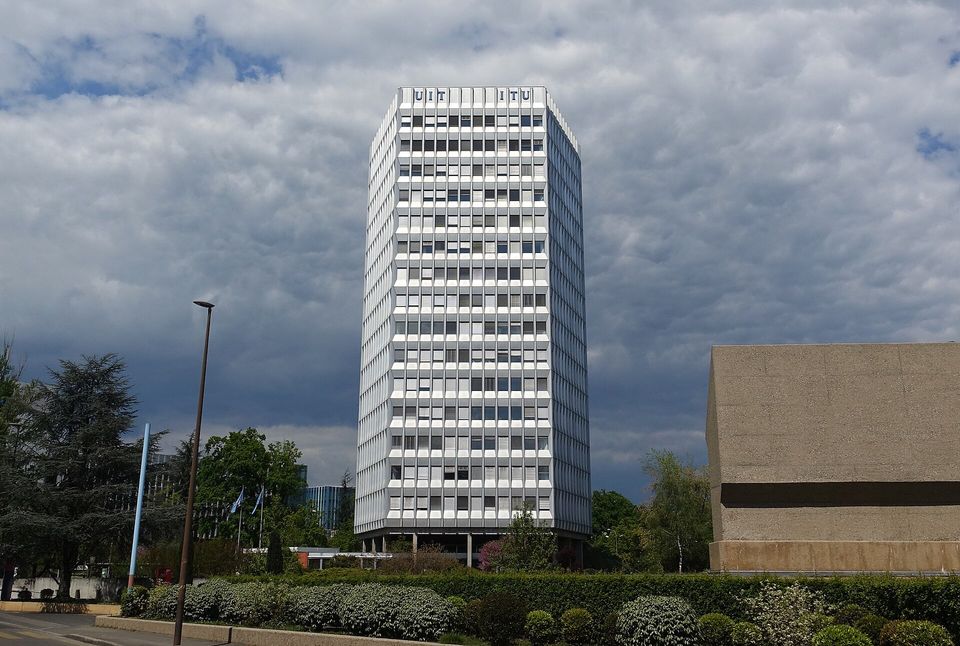
Radio waves do not stop at borders, so the bands used by broadcasting, aviation, mobile phones and satellites are agreed worldwide. The treaty that does this is revised every three or four years at a conference in Geneva, and the table it produces is the map every national regulator works from.
Key points
- The ITU was founded in Paris on 17 May 1865 as the International Telegraph Union and has had its seat in Geneva since 1948.
- Article 5 of the Radio Regulations, the Table of Frequency Allocations, covers every band from 8.3 kilohertz to 3,000 gigahertz.
- The allocation table divides the world into three regions, which is why a mobile phone's bands vary by continent.
- The World Radiocommunication Conference held in Dubai in late 2023 identified new mobile bands, including the 6 gigahertz range in Region 1.
- A satellite network not brought into use within the regulatory deadline, seven years for most, loses its place in the ITU's register.
The International Telecommunication Union, ITU, is the United Nations agency responsible for the shared use of the radio spectrum and satellite orbits and for the technical standards that let networks connect.
It is the oldest international organisation still in existence, founded in Paris on 17 May 1865 as the International Telegraph Union to agree rules for telegraph lines crossing frontiers, and it has had its seat in Geneva since 1948. Its 193 member states are joined by about 900 companies, universities and organisations as sector members, a figure the union gives on its membership pages.
Why does the radio spectrum need a treaty?
Two transmitters on the same frequency in the same place interfere, and radio waves, particularly at lower frequencies and from satellites, cross borders freely. From the first international radiotelegraph conference in Berlin in 1906, which followed a dispute over whether ships fitted by one company should answer stations of another, states have agreed to divide the spectrum by use. The instrument today is the Radio Regulations, an international treaty binding on all member states, whose central article, Article 5, is the Table of Frequency Allocations: for every band from 8.3 kilohertz to 3,000 gigahertz, a list of the services, such as broadcasting, mobile, aeronautical, radionavigation-satellite or radio astronomy, that may use it, marked primary or secondary.
The table divides the world into three regions: Region 1 covering Europe, Africa, the Middle East and the former Soviet Union; Region 2 the Americas; Region 3 Asia and the Pacific. Allocations can differ between them, which is why a mobile phone's bands vary by continent. Each country then writes its own national table within the international one and licenses users under it; in Germany that is the Bundesnetzagentur, in Britain Ofcom.
The conference
The Regulations are revised at a World Radiocommunication Conference, held every three to four years, most recently in Dubai in November and December 2023. Its agenda is set by the previous conference, and each item is studied for the intervening years by ITU study groups, which report on sharing and compatibility between the services asking for the same band. Decisions are taken by consensus wherever possible, and the resulting changes to the treaty come into force on a date the conference fixes. The 2023 conference, according to the ITU's final acts, identified new bands for mobile broadband, including the 6 gigahertz range in Region 1, and revised the rules for non-geostationary satellite constellations.
Satellites file in Geneva
For satellite networks the ITU also keeps the register. An operator planning a system must have its administration file the orbital positions and frequencies with the Radiocommunication Bureau, which publishes them so that other administrations can coordinate; the date of filing establishes priority, and a network that is not brought into use within the regulatory deadline, seven years for most, loses its place. The Master International Frequency Register that results is the record of who is entitled to protection from whom, and the reason that a launch to geostationary orbit is preceded, years earlier, by paperwork in Geneva.
Frequently asked questions
Why does the radio spectrum need an international treaty?
Two transmitters on the same frequency in the same place interfere, and radio waves, particularly at lower frequencies and from satellites, cross borders freely. Since the 1906 radiotelegraph conference in Berlin, states have agreed to divide the spectrum by use, today through the ITU's Radio Regulations.
What is the Table of Frequency Allocations?
It is Article 5 of the Radio Regulations: for every band from 8.3 kilohertz to 3,000 gigahertz, a list of the services, such as broadcasting, mobile, aeronautical, radionavigation-satellite or radio astronomy, that may use it, marked primary or secondary, with allocations that can differ between three world regions.
How often are the Radio Regulations revised?
At a World Radiocommunication Conference every three to four years, most recently in Dubai in November and December 2023. Each conference sets the next one's agenda, ITU study groups examine every item in between, and decisions are taken by consensus wherever possible.
Why do satellite operators file with the ITU?
An operator's administration must file the planned orbital positions and frequencies with the Radiocommunication Bureau, which publishes them so that others can coordinate. The filing date establishes priority, and a network not brought into use within the deadline, seven years for most, loses its place.