
Video: printing in Odia on a letterpress in Cuttack, half a minute of a trade that has nearly gone
Metal type, an inked forme and a sheet at a time at the Sansar Press in Odisha
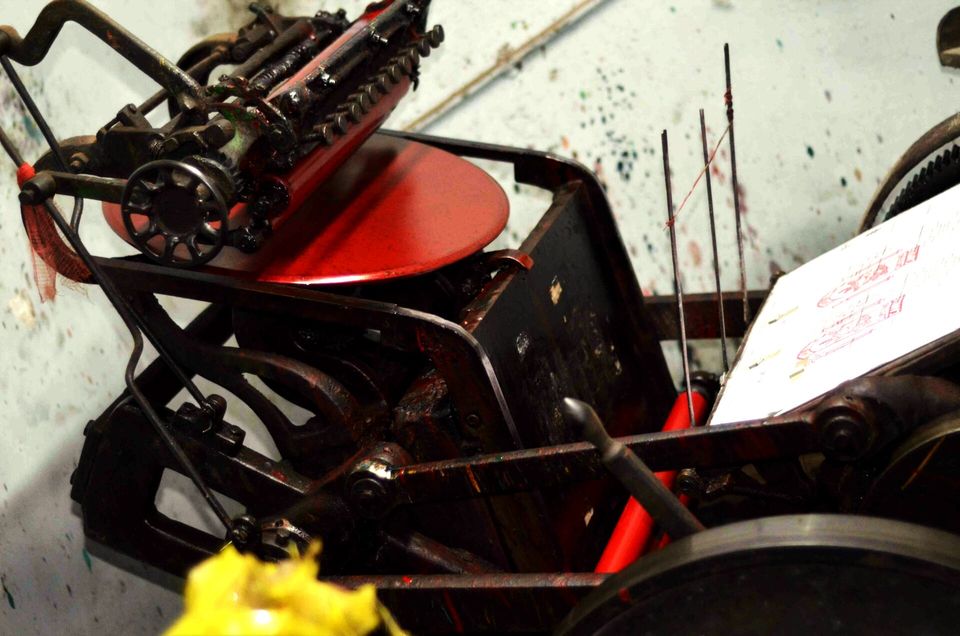
A clip of twenty-seven seconds filmed in 2014 shows a letterpress at work in Cuttack, the old printing city of the Indian state of Odisha, setting and printing the Odia script. This is what the film shows and why the press it records is a survival.
Key points
- The clip was filmed on 27 September 2014 at the Sansar Press in Cuttack and released under a Creative Commons Attribution-ShareAlike licence.
- Letterpress is printing from a raised surface: metal type is set in lines, locked in a forme, inked and pressed against paper.
- Christian missionaries set up the first printing press in Odisha at Cuttack in 1837.
The clip is twenty-seven seconds long and was filmed on 27 September 2014 by Subhashish Panigrahi, a Commons contributor from Odisha, at the Sansar Press in Cuttack, and released under the Creative Commons Attribution-ShareAlike licence.
Its file description says it shows printing in the Odia language on a letterpress; the frame holds the machine, the operator's hands and the sheets as they are fed and pulled.
What does a letterpress do?
Letterpress is printing from a raised surface: individual pieces of metal type, each cast with one character in relief, are set in lines, locked into a frame called a forme or chase, inked with rollers and pressed against paper. Each impression prints one side of one sheet. The type in the clip is Odia, a script of rounded letters whose forms are said to come from the palm leaves on which the language was written with a stylus before paper, and which needs a large fount because vowel signs attach above, below and beside the consonants. The platen press in the film, with its clamshell action, is the type of machine that small jobbing printers across India used for handbills, forms, invitations and small books through the twentieth century.
Cuttack and printing
Cuttack, on the Mahanadi delta, was the capital of Odisha until 1948 and the place where printing in Odisha began: Odia books had first been printed at the Serampore Mission Press in Bengal, and Christian missionaries set up the first press in Odisha at Cuttack in 1837, and the city's presses printed the newspapers and journals of the Odia language movement of the nineteenth century. Letterpress gave way to offset in Indian cities from the 1980s, and presses like the one in the clip survive for short runs where the cost of a plate is not worth paying; the film records a trade that is close to its end.
The source
The file page on Wikimedia Commons carries the contributor's name, the date and place of filming and the licence, which requires credit to the author and that any reuse be released under the same terms; the credit line under the player does that.
Frequently asked questions
What is letterpress printing?
Printing from a raised surface. Individual pieces of metal type, each cast with one character in relief, are set in lines, locked into a frame called a forme or chase, inked with rollers and pressed against paper. Each impression prints one side of one sheet.
Why is Cuttack linked to Odia printing?
Cuttack was the capital of Odisha until 1948, and Christian missionaries set up the first printing press in Odisha there in 1837. The city's presses printed the newspapers and journals of the Odia language movement of the nineteenth century.