
What a second is: 9,192,631,770 ticks of a caesium atom, and why the leap second is being retired
From a fraction of the day to a property of matter — the definition, the clocks and the world time scale
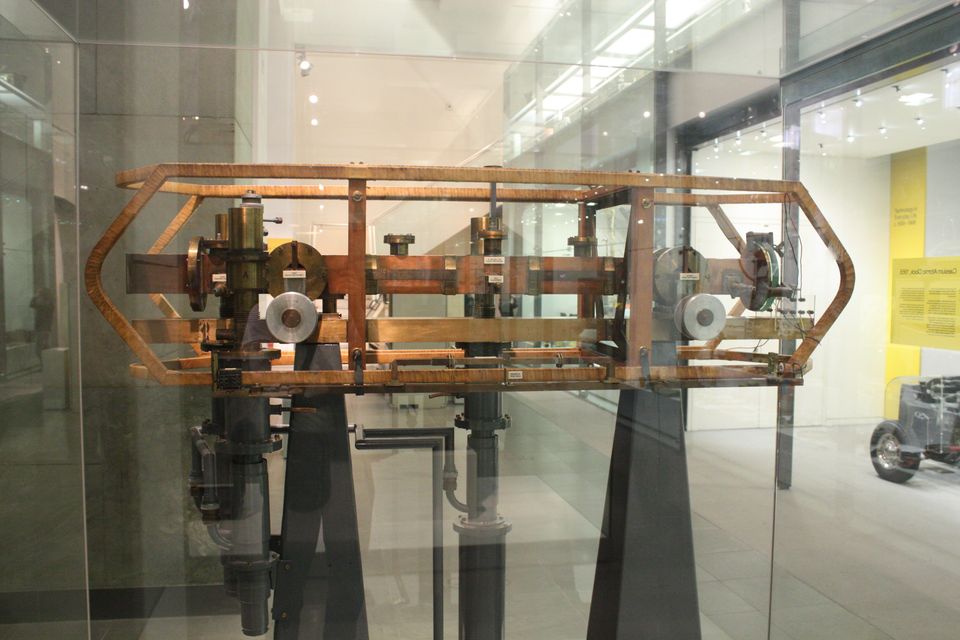
Since 1967 the second has been defined not by the Earth's rotation but by radiation from caesium-133 atoms. The definition, the clocks that realise it and the leap seconds that patch it to the planet are all set down in documents you can read.
Key points
- The SI fixes the caesium-133 hyperfine transition frequency at exactly 9,192,631,770 hertz; a second is that many periods of the radiation.
- The 13th General Conference on Weights and Measures adopted the caesium definition of the second in 1967, by Resolution 1.
- Louis Essen and Jack Parry operated the first caesium atomic clock at the National Physical Laboratory in Teddington in 1955.
- Leap seconds keep UTC within 0.9 seconds of the Earth's rotation; 27 have been added since 1972, the last on 31 December 2016.
- Resolution 4 of the 27th CGPM, in November 2022, decided to enlarge the permitted gap between UTC and the Earth's rotation by or before 2035.
A second, in the International System of Units, is fixed by an atom: 9,192,631,770 periods of the radiation of the caesium-133 atom, a number unchanged since 1967. The leap second, added to clock time 27 times since 1972 to keep it near the Earth's rotation, is being retired: a resolution of 2022 ends the practice by 2035.
The second is the base unit of time in the International System of Units, and it is the unit on which the metre, the volt and most others now depend. The SI Brochure of the International Bureau of Weights and Measures (BIPM) defines it by fixing the numerical value of the caesium frequency: the unperturbed ground-state hyperfine transition frequency of the caesium-133 atom is exactly 9,192,631,770 hertz, and a second is that many periods of the corresponding radiation. The wording dates from the 2019 revision of the SI; the number has not changed since 1967.
Before the atom
For most of history the second was 1/86,400 of a mean solar day. When astronomers found that the Earth's rotation was irregular and slowing, the 11th General Conference on Weights and Measures (CGPM) in 1960 tied the second to the Earth's orbit instead, as a fraction of the tropical year 1900, the "ephemeris second". That was precise but impractical, since the year cannot be measured in a laboratory. In 1955 Louis Essen and Jack Parry at the National Physical Laboratory in Teddington had operated the first caesium atomic clock, the instrument now in the Science Museum in London, and by 1967 the 13th CGPM adopted the caesium definition by Resolution 1.
How the clocks work
A caesium clock does not count atoms; it tunes a microwave oscillator to the frequency that flips the atoms between two energy states and counts the oscillator's cycles. The best primary standards are caesium fountains, in which a cloud of atoms cooled by lasers is tossed upward through a microwave cavity and falls back, and which national laboratories report as accurate to a few parts in 10 to the 16th power. Optical clocks using strontium or ytterbium atoms now surpass them, and the 27th CGPM in 2022 set out a road map towards a redefinition based on an optical transition, expected in the 2030s once several laboratories' clocks agree.
From a clock to world time
No single clock keeps the world's time. The BIPM combines readings from about 450 atomic clocks in more than 80 laboratories into International Atomic Time (TAI), a weighted average steered by the primary standards. Coordinated Universal Time (UTC), the basis of civil time everywhere, is TAI offset by a whole number of seconds so that it stays within 0.9 seconds of the Earth's rotation. The offset is adjusted by leap seconds, inserted on the last day of June or December on the decision of the International Earth Rotation and Reference Systems Service; 27 have been added since the system began in 1972, the last on 31 December 2016.
Why is the leap second being retired?
Leap seconds break software that expects every minute to have sixty seconds, and their timing cannot be predicted more than six months ahead. Resolution 4 of the 27th CGPM in November 2022 decided that the maximum difference between UTC and the rotation of the Earth should be increased to a larger value "by or before 2035", which in effect ends the practice for at least a century. The Earth's rotation has recently sped up slightly, and a negative leap second, never yet used, was under discussion before the resolution made it moot.
Frequently asked questions
Why is the second defined by a caesium atom?
Because the Earth is an irregular clock. The second was once 1/86,400 of a mean solar day, then a fraction of the tropical year 1900, which could not be measured in a laboratory. Caesium clocks, first operated in 1955, offered a frequency any laboratory could reproduce, and the definition followed in 1967.
What is a leap second?
A second inserted into Coordinated Universal Time on the last day of June or December, on the decision of the International Earth Rotation and Reference Systems Service, to keep UTC within 0.9 seconds of the Earth's rotation. Twenty-seven have been added since 1972, the last on 31 December 2016.
Will the definition of the second change again?
Probably. Optical clocks using strontium or ytterbium atoms now surpass caesium standards, and the 27th General Conference on Weights and Measures in 2022 set out a road map towards a redefinition based on an optical transition, expected in the 2030s once several laboratories' clocks agree.