
How a European patent is granted: search, examination, opposition and the unitary patent
The Munich office, the 1973 convention it applies, and the court that opened in 2023
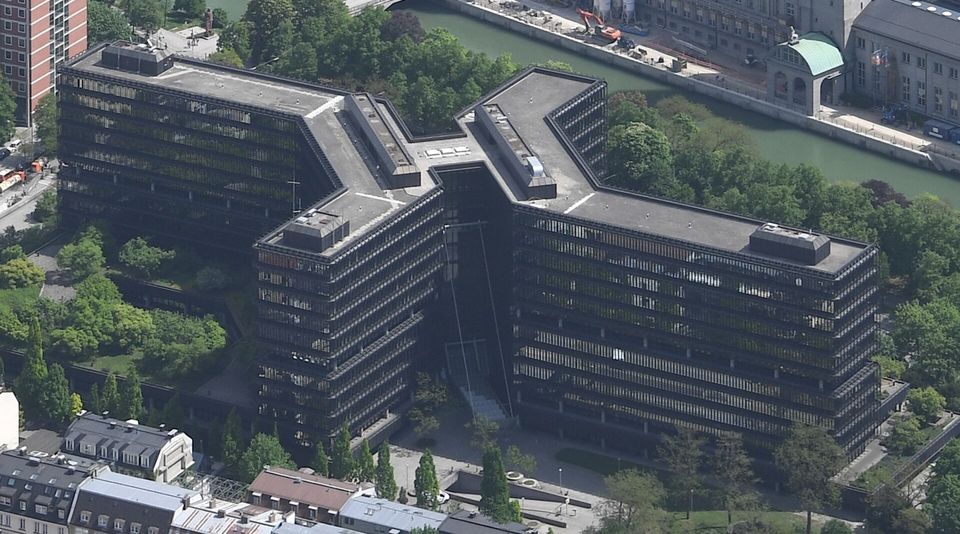
A patent is a twenty-year right to exclude others from an invention, granted after an office has examined whether the invention is new and inventive. The European Patent Office's procedure, its fees and its opposition system, and the unitary patent that changed the map in 2023.
Key points
- The European Patent Convention was signed in Munich in 1973 and came into force in 1977; the European Patent Office has 39 member states.
- A European patent requires an invention that is new, involves an inventive step and is susceptible of industrial application.
- Applications are published eighteen months after the earliest filing date, whether or not a patent is later granted.
- For nine months after grant, anyone may file an opposition at the European Patent Office.
- The unitary patent and the Unified Patent Court came into effect on 1 June 2023, with seventeen participating EU states at the outset.
The European Patent Office examines and grants patents under the European Patent Convention, a treaty signed in Munich in 1973 that came into force in 1977. The Office, headquartered in Munich with a large site in The Hague, is not an institution of the European Union: its 39 member states include the EU members and others such as the United Kingdom, Switzerland, Norway and Turkey.
A single application, in English, French or German, can lead to a bundle of national patents in any of those states, each then enforced in the national courts. The Office publishes its filings, grants and the fields they fall in every year in its Patent Index.
What makes an invention patentable?
The Convention grants a patent for an invention in any field of technology that is new, involves an inventive step and is susceptible of industrial application. Novelty is absolute: an invention disclosed anywhere in the world before the filing date, including by the inventor, is not new. Inventive step asks whether the invention would have been obvious to a person skilled in the art, a legal fiction of an averagely competent practitioner, and the Office applies a structured problem-and-solution approach set out in its published Guidelines for Examination. Discoveries, mathematical methods, business methods and computer programs as such are excluded, though inventions that use them are not, a boundary the Boards of Appeal have drawn case by case.
The procedure
The applicant files and pays a filing fee and a search fee. The Office's search division produces a search report listing the prior art it found, with a written opinion. Eighteen months after the earliest filing date the application is published, whether or not it will be granted, which is why patent databases are the largest public record of industrial research. The applicant then requests examination, and the examining division, three examiners, corresponds with the applicant over the claims, the sentences that define the scope of the monopoly, until they are allowed or refused. On grant the applicant pays a fee and files translations of the claims; the patent takes effect in each designated state on validation and renewal fees fall due every year for the twenty-year term from filing. The Office's own figures put the average time from filing to grant at several years.
Opposition
For nine months after grant, anyone may file an opposition at the Office, arguing that the patent should not have been granted. An opposition division hears the case, and either side may appeal to the Boards of Appeal. The procedure is cheaper than litigation and is used heavily in pharmaceuticals and telecommunications, where a competitor's patent may be worth attacking centrally before it is enforced in a dozen courts. A patent survives opposition unchanged, amended, or revoked.
The unitary patent
On 1 June 2023 two long-delayed instruments came into effect. A European patent can now be registered as a unitary patent, a single right covering the participating EU states, seventeen at the outset and eighteen with Romania from 2024, with one renewal fee; and the Unified Patent Court, with its central division in Paris, Munich and, since 2024, Milan, and local divisions across the participating states, hears infringement and validity cases for unitary patents and, unless the holder opts out, for classic European patents in those states. Spain and Poland do not take part, and the United Kingdom withdrew after leaving the EU. The court publishes its decisions and its caseload; its first years are being read by practitioners as the beginning of a European patent litigation system in fact as well as in name.
Frequently asked questions
Is the European Patent Office an EU institution?
No. It applies the European Patent Convention, a treaty signed in Munich in 1973, and its 39 member states include the EU members and others such as the United Kingdom, Switzerland, Norway and Turkey.
How long does a European patent last?
The term is twenty years from filing. On grant the patent takes effect in each designated state on validation, and renewal fees fall due every year of the term.
What is a unitary patent?
Since 1 June 2023 a European patent can be registered as a unitary patent, a single right covering the participating EU states with one renewal fee. There were seventeen states at the outset and eighteen with Romania from 2024; Spain and Poland do not take part.
Sources
- European Patent Convention
- European Patent Convention, Article 52: Patentable inventions
- Guidelines for Examination in the European Patent Office
- Patent Index 2024
- Regulation (EU) No 1257/2012 implementing enhanced cooperation in the area of the creation of unitary patent protection
- Agreement on a Unified Patent Court (2013)