
What a competition regulator examines in a merger: the European Commission's test
Turnover thresholds, Phase I and Phase II, the significant impediment test and the remedies that clear a deal
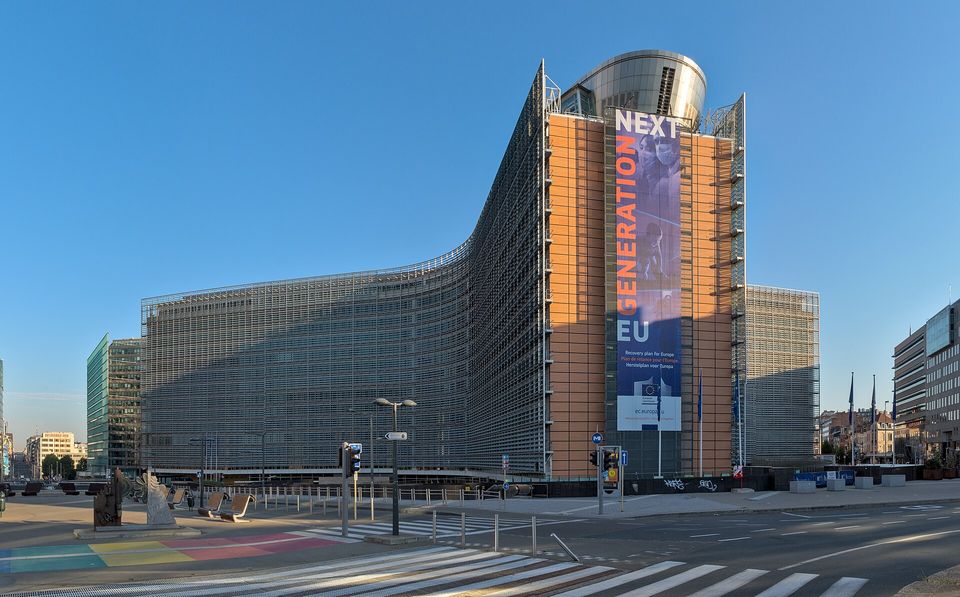
Large mergers cannot close in Europe until the Commission has cleared them. Which deals must be notified, what the investigators look for, how long they have, and why outright prohibitions are rare while conditions are common.
Key points
- EU merger control rests on Council Regulation (EC) No 139/2004 and is exercised by the Commission's Directorate-General for Competition.
- A deal has a Union dimension if combined worldwide turnover exceeds 5 billion euros and two parties each have EU turnover above 250 million.
- The Commission asks whether a merger would significantly impede effective competition, in particular by creating or strengthening a dominant position.
- Phase I lasts 25 working days; a Phase II in-depth investigation lasts 90 working days and can be extended to 125.
- In February 2019 the Commission prohibited the merger of the Siemens and Alstom rail businesses.
Merger control is the power of a competition authority to review a transaction before it happens and to block or condition it. In the European Union that power rests on the EU Merger Regulation, Council Regulation (EC) No 139/2004, and is exercised by the European Commission's Directorate-General for Competition in Brussels.
A merger that meets the regulation's thresholds may not be completed until the Commission has approved it, and the parties must notify it and wait; completing early, gun-jumping in the jargon, has been fined.
Which deals are caught
The regulation applies to concentrations with a Union dimension, defined by turnover: a combined worldwide turnover of more than 5 billion euros and Union-wide turnover of more than 250 million euros for each of at least two of the companies, unless each of them makes more than two-thirds of its Union turnover in one member state, in which case the national authority takes the case. A second, lower set of thresholds catches deals with a presence in several member states. Mergers below the thresholds fall to the national authorities, the Bundeskartellamt, the Autorité de la concurrence and their counterparts, and the regulation provides for referrals between them and the Commission in both directions.
What test does the Commission apply?
The Commission asks whether the merger would significantly impede effective competition in the internal market or a substantial part of it, in particular by creating or strengthening a dominant position. Its Horizontal Merger Guidelines explain how it defines the relevant market, measures concentration and assesses whether the merged firm could raise prices or reduce choice, and whether efficiencies or the entry of rivals would offset that. The timetable is fixed. Phase I lasts 25 working days from a complete notification and ends in clearance, clearance with commitments, or the opening of Phase II, an in-depth investigation of 90 working days that can be extended to 125. The Commission's statistics, published on its website, show that the great majority of notified mergers are cleared in Phase I without conditions.
Remedies
Where the Commission has concerns, the parties usually offer commitments rather than face a prohibition: most often the divestiture of a business or of overlapping assets to a buyer the Commission approves, with a monitoring trustee to see it through. Behavioural commitments, promises about access or pricing, are accepted less readily. A prohibition is the exception: the Commission's public record lists only a few dozen since 1990. The clearest recent example is Siemens/Alstom in February 2019, where the Commission refused to allow the merger of the two companies' rail businesses on the ground that it would have removed competition in signalling and very high-speed trains, a decision that the French and German governments criticised and that prompted a debate about industrial policy in merger control.
The wider picture
The Commission's decisions can be appealed to the General Court and then the Court of Justice; several prohibitions have been annulled and several clearances challenged by rivals. The United States runs a parallel system under the Hart-Scott-Rodino Act, with the Federal Trade Commission and the Department of Justice, and the United Kingdom's Competition and Markets Authority reviews mergers separately since Brexit, so a global deal may need three or more clearances that do not always agree. The Digital Markets Act of 2022 added a duty on the largest platforms to inform the Commission of every acquisition, whatever its size, a response to the criticism that the turnover thresholds let the acquisition of small rivals pass unexamined.
Frequently asked questions
Which mergers must be notified to the European Commission?
Concentrations with a Union dimension: combined worldwide turnover above 5 billion euros and Union-wide turnover above 250 million euros for each of at least two companies, unless each makes more than two-thirds of its EU turnover in one member state. A second, lower set of thresholds catches deals present in several member states.
How long does an EU merger review take?
Phase I lasts 25 working days from a complete notification and ends in clearance, clearance with commitments, or the opening of Phase II, an investigation of 90 working days that can be extended to 125. The great majority of notified mergers are cleared in Phase I without conditions.
How often does the Commission block a merger?
Rarely. Parties usually offer commitments, most often the divestiture of a business or of overlapping assets, rather than face a prohibition, and the Commission's record lists only a few dozen prohibitions since 1990. Siemens/Alstom in February 2019 is the clearest recent example.
Sources
- Council Regulation (EC) No 139/2004 on the control of concentrations between undertakings (EU Merger Regulation)
- Guidelines on the assessment of horizontal mergers (2004/C 31/03)
- Statistics on merger cases
- Mergers: Commission prohibits Siemens' proposed acquisition of Alstom (IP/19/881, 6 February 2019)
- Regulation (EU) 2022/1925 on contestable and fair markets in the digital sector (Digital Markets Act)