
How penicillin kills bacteria, and why a growing number of them no longer die
A mould on a plate in 1928, the cell wall it attacks, and the enzyme that resistant strains make
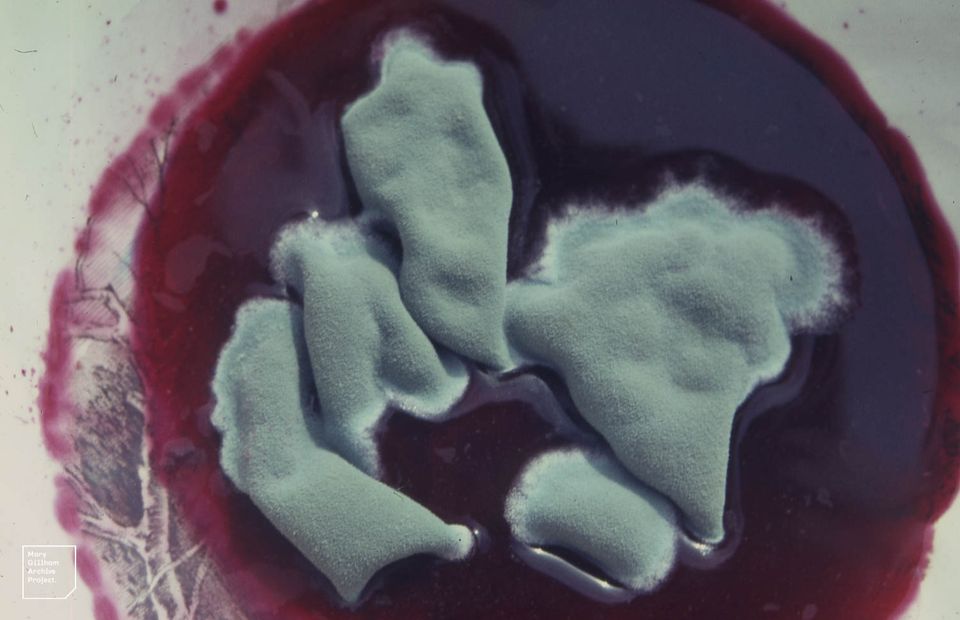
Penicillin does not poison a bacterium; it stops it building its wall, so that the cell bursts as it grows. The mechanism was worked out decades after Alexander Fleming's plate, and it explains both why the drug is harmless to human cells and how bacteria learned to break it.
Key points
- Alexander Fleming noticed penicillin's effect in September 1928 at St Mary's Hospital in London and published it in 1929.
- Howard Florey, Ernst Chain and Norman Heatley at Oxford purified enough penicillin to treat a first patient in February 1941.
- Penicillin's beta-lactam ring binds the enzymes that cross-link a bacterium's peptidoglycan wall, so the wall gives way as the cell grows.
- Human cells have no cell wall, which is why penicillin kills many bacteria at concentrations harmless to human cells.
- Bacteria resist with beta-lactamase enzymes that open the ring or, like MRSA, with an altered penicillin-binding protein.
Penicillin is the first antibiotic, a substance made by moulds of the genus *Penicillium* that kills many bacteria at concentrations harmless to human cells. Alexander Fleming noticed in September 1928, at St Mary's Hospital in London, that a mould contaminating a culture plate of staphylococci had cleared a zone around itself, and published the observation in 1929.
Turning it into a medicine took a second team: Howard Florey, Ernst Chain and Norman Heatley at Oxford, who purified enough to treat the first patient in February 1941. Fleming, Florey and Chain shared the Nobel Prize in Physiology or Medicine in 1945.
The wall
Bacteria are held together by a cell wall of peptidoglycan, a mesh of sugar chains cross-linked by short peptides, which resists the pressure inside the cell. Human cells have no such wall, which is the source of the drug's selectivity. Penicillin's core is a beta-lactam ring, a strained four-membered ring of atoms whose shape mimics the end of the peptide the bacterium uses to make cross-links. The enzymes that form those links, the penicillin-binding proteins, bind the drug instead, and the ring springs open and attaches permanently to the enzyme's active site. The mesh stops being repaired and extended; as the cell grows and divides, the wall gives way and the cell lyses. Penicillin is therefore most effective against bacteria that are actively growing.
Dorothy Hodgkin determined the molecule's structure by X-ray crystallography in 1945, confirming the beta-lactam ring that chemists had doubted could exist, and the mechanism on the wall was established through the 1960s.
The family
The natural product, benzylpenicillin, has to be injected and works mainly on Gram-positive bacteria. Chemists learned in the late 1950s to make the core of the molecule and attach different side chains, producing ampicillin and amoxicillin, which are taken by mouth and reach more species, and methicillin, which resisted the first form of resistance. The cephalosporins and the carbapenems share the beta-lactam ring and the same target and are counted in the same family; the World Health Organization's list of essential medicines includes amoxicillin among the antibiotics recommended for first-line use.
Why do some bacteria no longer die?
Bacteria that survive make an enzyme, beta-lactamase, that opens the ring before the drug reaches its target; Abraham and Chain described such an enzyme in 1940, before penicillin was in clinical use. Resistance of this kind spread through hospitals within years and is passed between bacteria on plasmids. A second route changes the target: methicillin-resistant *Staphylococcus aureus*, MRSA, carries a gene for an altered penicillin-binding protein that no beta-lactam fits well. The answer to the enzyme has been to pair a penicillin with an inhibitor of the enzyme, clavulanic acid with amoxicillin being the common combination. The answer to the altered target has been other classes of drug, and the WHO's global surveillance reports list resistant staphylococci and Gram-negative bacteria among the pathogens for which new antibiotics are most urgently needed.
Frequently asked questions
How does penicillin kill bacteria?
Its beta-lactam ring mimics the end of the peptide bacteria use to cross-link their cell wall. The cross-linking enzymes, the penicillin-binding proteins, bind the drug instead and are permanently blocked, so as the cell grows and divides its wall gives way and the cell lyses.
Why doesn't penicillin harm human cells?
Penicillin attacks the peptidoglycan cell wall that holds bacteria together, and human cells have no such wall. That difference is the source of the drug's selectivity, and the reason it kills many bacteria at concentrations harmless to human cells.
Who discovered penicillin?
Alexander Fleming observed in 1928 that a mould had cleared a zone in a culture of staphylococci, and published it in 1929. Howard Florey, Ernst Chain and Norman Heatley at Oxford turned it into a medicine, treating a first patient in 1941; Fleming, Florey and Chain shared the 1945 Nobel Prize.
How do bacteria become resistant to penicillin?
Some make beta-lactamase, an enzyme that opens the drug's ring before it reaches its target, a resistance passed between bacteria on plasmids. Others, such as methicillin-resistant Staphylococcus aureus, carry a gene for an altered penicillin-binding protein that no beta-lactam fits well.
Sources
- A. Fleming, On the Antibacterial Action of Cultures of a Penicillium (British Journal of Experimental Pathology, 1929)
- E. P. Abraham and E. Chain, An Enzyme from Bacteria able to Destroy Penicillin (1940)
- The Nobel Prize in Physiology or Medicine 1945
- Sir Howard Florey, Nobel Lecture: Penicillin (1945)
- WHO Model Lists of Essential Medicines
- WHO Bacterial Priority Pathogens List, 2024