
The central banks' bank: what the Bank for International Settlements in Basel actually does
A 1930 reparations clearing house that became the meeting room of world monetary policy
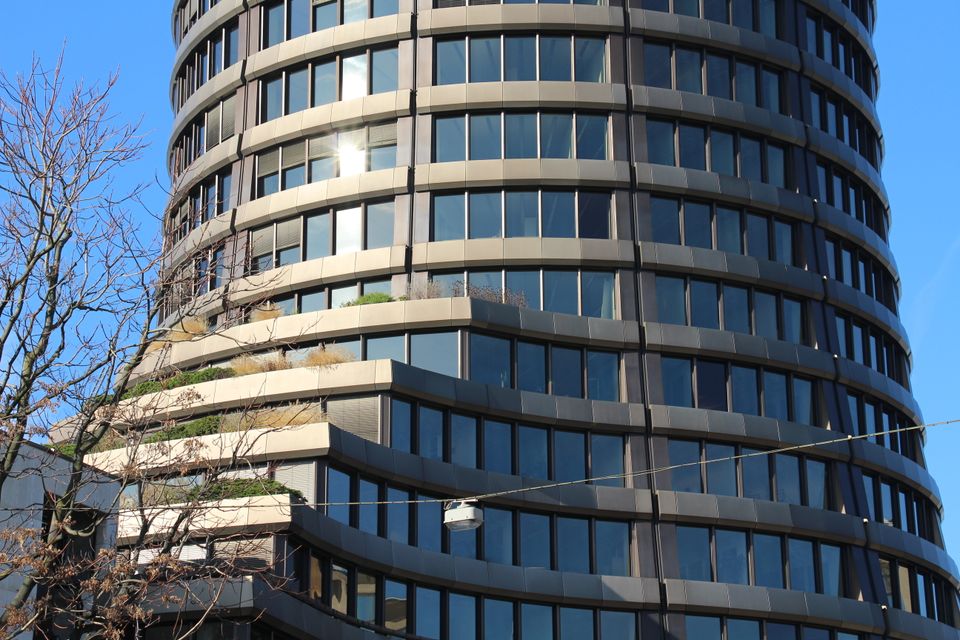
The round tower by Basel station houses the oldest international financial institution. It holds central banks' reserves, hosts the committee that wrote the Basel capital rules, and gathers governors every two months behind closed doors.
Key points
- The BIS was established by the Hague Agreements of January 1930 to handle German reparation payments under the Young Plan.
- The Bank for International Settlements is owned by sixty-three central banks; it bought out its last private shareholders in 2001.
- The Basel Committee on Banking Supervision was formed by the Group of Ten central bank governors in 1974 after the failure of Bankhaus Herstatt.
- Basel III, finalised in 2017, requires Common Equity Tier 1 capital of at least 4.5 per cent of risk-weighted assets, plus a 2.5 per cent conservation buffer and a 3 per cent leverage ratio.
- The BIS lends to central banks, not to governments or the public, and does not set anyone's interest rates.
The Bank for International Settlements in Basel is a bank whose customers are central banks: it takes their deposits, invests a share of the world's official reserves and deals in gold and foreign exchange for them. Owned by sixty-three central banks, it also hosts the Basel Committee on Banking Supervision and gathers governors every two months.
The bank was established by the Hague Agreements of January 1930 to handle German reparation payments under the Young Plan, which made it, by its own account, the oldest international financial institution still in existence. The reparations ended within years; the bank stayed, and today it describes its mission as serving central banks "in their pursuit of monetary and financial stability". Its head office has stood since 1977 in an eighteen-storey round tower beside Basel's main station, designed by Martin Burckhardt, with a second building in the city and representative offices in Hong Kong and Mexico City.
Who owns the BIS?
The BIS is a company limited by shares under its own statutes, and its shares are held by central banks: sixty-three of them, according to the bank's membership list, from the Federal Reserve and the European Central Bank to the central banks of Argentina, Vietnam and Iceland. Shares were once traded privately; the bank bought out the last private shareholders in 2001. Governors of member central banks meet in Basel every two months, and the bimonthly meeting of the Global Economy Meeting, chaired by a serving governor, is one of the few regular occasions on which the heads of most of the world's monetary authorities sit in one room without a communiqué.
The banking side
The BIS takes deposits from central banks and invests them, holding a share of the world's official foreign exchange reserves; it deals in gold and foreign exchange for its customers and acts as agent or trustee in international financial operations. Its balance sheet is published in an annual report with a financial year ending 31 March. It also runs the BIS Innovation Hub, set up in 2019, whose projects with member banks test wholesale central bank digital currencies and cross-border payment rails.
The committees
What gives Basel its reputation is the committees the bank hosts. The Basel Committee on Banking Supervision was formed by the Group of Ten central bank governors in 1974 after the failure of Bankhaus Herstatt. It has no treaty and no legal force; its standards become law only when members write them into their own rulebooks, which they have done. Basel III, agreed after the 2008 crisis and finalised in 2017, requires banks to hold Common Equity Tier 1 capital of at least 4.5 per cent of risk-weighted assets, plus a capital conservation buffer of 2.5 per cent, and a leverage ratio of 3 per cent of total exposure, together with a Liquidity Coverage Ratio that obliges a bank to hold enough liquid assets to survive thirty days of stress.
Other bodies with secretariats in the tower include the Committee on Payments and Market Infrastructures, the Committee on the Global Financial System, the International Association of Insurance Supervisors and the Financial Stability Board, which the G20 created in 2009. The BIS's quarterly review and its statistics on cross-border banking, debt securities and derivatives are among the most cited series in international finance.
What it is not
The BIS lends to central banks, not to governments or the public, and it does not set anyone's interest rates. It is not a UN body and it is not the International Monetary Fund, which is owned by governments and lends to countries in payments difficulties. Its influence is that of the meeting room: standards written in Basel are adopted in Washington, Frankfurt, Tokyo and Beijing because their central banks helped write them.
Frequently asked questions
Who are the customers of the Bank for International Settlements?
Central banks. The BIS takes their deposits and invests them, deals in gold and foreign exchange on their behalf, and acts as agent or trustee in international financial operations. It does not lend to governments or to the public.
Are the Basel III rules legally binding?
Not by themselves. The Basel Committee on Banking Supervision has no treaty and no legal force; its standards become law only when its members write them into their own rulebooks, which they have done.
How is the BIS different from the IMF?
The BIS is owned by central banks and lends to them. The International Monetary Fund is owned by governments and lends to countries in payments difficulties. The BIS sets no one's interest rates; its influence comes from standards written in its meeting rooms by the central banks that then adopt them.