
How polio eradication is certified: three years without a case, and surveillance that must prove it
Two of the three wild poliovirus types are gone; the rules for declaring the third gone are written
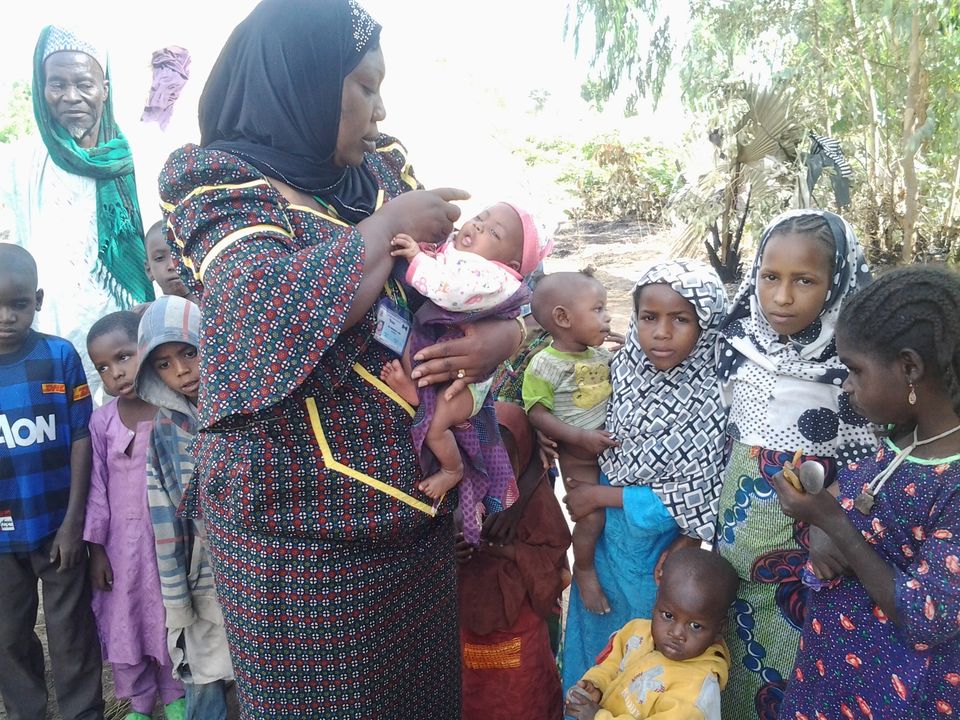
A country cannot simply announce that it has no polio. Certification is the work of independent commissions that test whether a region's surveillance would have found the virus had it been there. Two types have passed; one remains.
Key points
- World Health Assembly resolution WHA41.28 of May 1988 committed WHO's members to eradicating polio, which then paralysed some 350,000 children in more than 125 countries.
- Wild poliovirus type 2 was declared eradicated in September 2015 and type 3 on 24 October 2019; type 1 is still transmitted in Pakistan and Afghanistan.
- Certification-standard surveillance asks for at least one non-polio acute flaccid paralysis case per 100,000 children under fifteen a year, with adequate stool samples in 80 per cent of cases.
- The WHO African Region was certified free of wild poliovirus on 25 August 2020; the Eastern Mediterranean is the only region not certified.
- Outbreaks of circulating vaccine-derived poliovirus, most of type 2, are now more numerous than wild polio cases.
Polio eradication is certified virus type by virus type and region by region. A WHO region is certified only when every country in it has gone at least three years without a case of wild poliovirus while running certification-standard surveillance, and an independent global commission reviews the evidence before it declares a type eradicated.
The Global Polio Eradication Initiative dates from resolution WHA41.28 of the World Health Assembly in May 1988, which committed the World Health Organization's members to eradicating poliomyelitis. WHO estimated that year that the disease paralysed some 350,000 children in more than 125 countries. The initiative is run by WHO, Rotary International, the US Centers for Disease Control and Prevention, UNICEF, the Bill & Melinda Gates Foundation and Gavi, and its tools are two vaccines: the oral vaccine of live weakened virus, given as two drops, and the injected inactivated vaccine.
Three viruses, not one
Wild poliovirus comes in three types, and eradication is certified type by type. The Global Commission for the Certification of the Eradication of Poliomyelitis, an independent body of experts convened by WHO, declared type 2 eradicated in September 2015, the last case having been detected in India in 1999, and type 3 eradicated on 24 October 2019, the last case having been found in Nigeria in 2012. Type 1 remains, transmitted in Pakistan and Afghanistan, the only countries never to have interrupted it.
What does certification require?
A region is certified only when every country in it has gone at least three years without a case of wild poliovirus in the presence of certification-standard surveillance. The core of that surveillance is acute flaccid paralysis reporting: every case of sudden limb weakness in a child under fifteen must be reported and investigated, with two stool samples collected within fourteen days of onset and tested in an accredited laboratory. The standard asks a country to find at least one non-polio case of such paralysis per 100,000 children under fifteen each year — evidence that the system is sensitive enough to have caught polio — and to collect adequate stool samples in at least 80 per cent of cases. Environmental surveillance, testing sewage for the virus, supplements it. Regional certification commissions review each country's documentation before the global commission signs.
The regions certified
The WHO Region of the Americas was certified free of wild poliovirus in 1994, the Western Pacific in 2000, Europe in 2002, South-East Asia in 2014 after India's last case in 2011, and Africa on 25 August 2020, four years after the last wild case in Nigeria. The Eastern Mediterranean Region, which includes Pakistan and Afghanistan, is the one not certified. Global certification will require three years without a type 1 case anywhere, with surveillance to the standard throughout.
The complication
The oral vaccine's weakened virus can, in under-immunised communities, circulate and regain the ability to paralyse. Outbreaks of circulating vaccine-derived poliovirus, most of type 2, have been reported in dozens of countries since the type 2 component was withdrawn from routine oral vaccine in 2016, and are now more numerous than wild cases. A more genetically stable novel oral vaccine against type 2 has been used in campaigns under Emergency Use Listing since 2021 and was prequalified in December 2023. Certification of wild virus eradication would not end the programme; the eradication strategy requires stopping vaccine-derived transmission as well, and containing the remaining virus stocks in laboratories.
Frequently asked questions
How long must a country go without polio to be certified?
At least three years without a case of wild poliovirus, in the presence of certification-standard surveillance. A region is certified only when every country in it meets that test; regional certification commissions review each country's documentation before the global commission signs.
Which countries still have wild polio?
Wild poliovirus type 1 is still transmitted in Pakistan and Afghanistan, the only countries never to have interrupted it. Both are in WHO's Eastern Mediterranean Region, the one region not yet certified free of wild poliovirus.
Why does vaccine-derived poliovirus matter for eradication?
The oral vaccine's weakened virus can circulate in under-immunised communities and regain the ability to paralyse. Outbreaks of circulating vaccine-derived poliovirus, most of type 2, now outnumber wild cases, and the eradication strategy requires stopping that transmission as well as wild virus, and containing laboratory stocks.