
How the Nobel Prize in Literature is chosen: eighteen chairs, one deadline and fifty years of silence
What Alfred Nobel's will asked for, who may nominate, and how the Swedish Academy gets from two hundred names to one
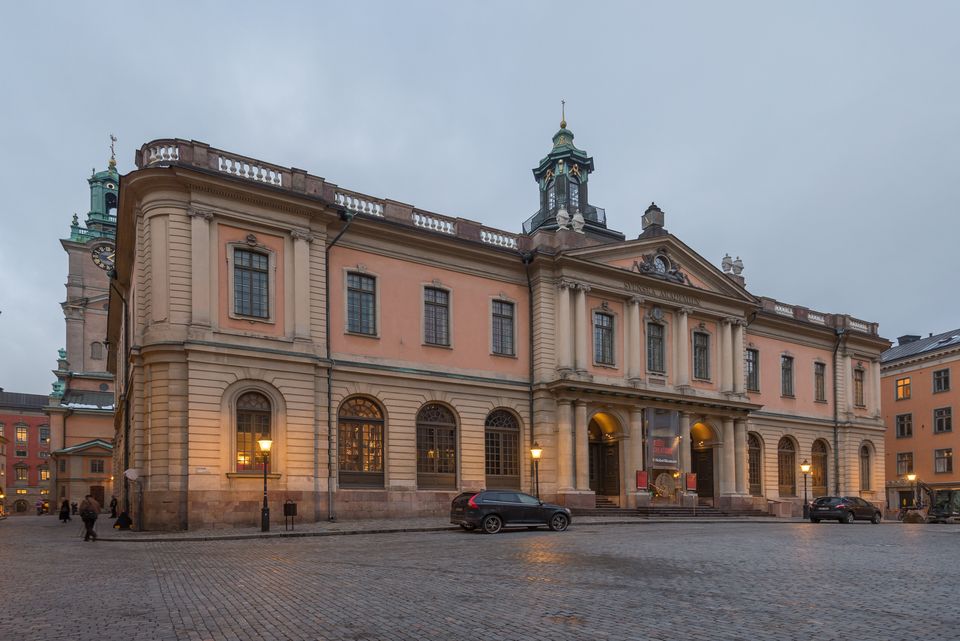
Every October a door opens in the old stock exchange building on Stockholm's Stortorget and a name is read out. The process behind it is set down in the Nobel Foundation's statutes and in the Academy's own procedure.
Key points
- Alfred Nobel's will of 27 November 1895 named the Swedish Academy, founded in 1786, to award the prize for literature.
- Nominations for the Nobel Prize in Literature must arrive by 31 January of the prize year; self-nomination is invalid.
- The Academy's Nobel Committee draws up a preliminary list of fifteen to twenty names in April and a shortlist of five in May.
- A Nobel literature laureate must receive more than half the votes cast when the Swedish Academy votes in early October.
- Literature prize nominations and deliberations are sealed for fifty years; the prize sum was raised to 11 million Swedish kronor in 2023.
The Swedish Academy chooses the Nobel laureate in literature in stages. Qualified nominators must send names by 31 January; the Academy's Nobel Committee narrows them to a shortlist of five by May; members read the shortlisted authors over the summer; and in early October a laureate needs more than half the votes cast. The files stay sealed for fifty years.
The Nobel Prize in Literature is awarded by the Swedish Academy, a body of eighteen members founded by King Gustav III in 1786 on the model of the Académie française to cultivate "the purity, strength and sublimity of the Swedish language". Alfred Nobel's will of 27 November 1895 named it to award one of his five prizes, to "the person who shall have produced in the field of literature the most outstanding work in an ideal direction". The Academy has met since 1914 in the Börshuset, the eighteenth-century exchange building on Stortorget in Stockholm's old town, where the laureate is announced from the doorway of its session room.
Who can nominate a writer for the Nobel Prize?
The Nobel Foundation's statutes restrict nomination to members of the Swedish Academy and similar academies and institutions, professors of literature and linguistics at universities, previous laureates, and presidents of national writers' associations. Self-nomination is invalid, and so is a nomination submitted after 31 January of the prize year. The Academy sends invitations to nominate each autumn and, by its own account, receives around two hundred to two hundred and fifty proposals a year.
From the long list to one name
A Nobel Committee of four or five Academy members sorts the nominations. In April it produces a preliminary list of fifteen to twenty names for the full Academy, in May a shortlist of five. Over the summer the members read the shortlisted authors, in the original where they can and in translation where they cannot, sometimes commissioning translations for the purpose. In early October the Academy votes; a laureate must receive more than half the votes cast. The Academy's active members currently number fewer than eighteen after resignations in 2018, and its statutes were amended that year to allow members to leave.
Secrecy
The statutes seal all nominations, evaluations and deliberations for fifty years. Each January the Nobel Foundation's archive opens the files of the year that has passed the limit, which is how it is known, for instance, that Leo Tolstoy was nominated repeatedly without being chosen, and that James Joyce and Marcel Proust were never nominated at all. Speculation before the announcement rests on nothing the Academy has said.
The prize itself
The prize consists of a medal, a diploma and a sum set each year by the Nobel Foundation from the return on Nobel's estate; it was raised to 11 million Swedish kronor in 2023. The Academy may divide the prize between two laureates, which it has done four times, most recently in 1974, and it may withhold it, which it did in seven years including 1914 and 1918 and, by postponement, in 2018 when the prize was awarded a year late alongside the 2019 award. Laureates receive the prize from the King of Sweden at the ceremony in Stockholm Concert Hall on 10 December, the anniversary of Nobel's death.
Frequently asked questions
Who can nominate someone for the Nobel Prize in Literature?
Under the Nobel Foundation's statutes: members of the Swedish Academy and of similar academies and institutions, professors of literature and linguistics, previous laureates and presidents of national writers' associations. Self-nomination is invalid, and so is a nomination submitted after 31 January of the prize year.
When are Nobel literature nominations made public?
Only after fifty years. The statutes seal all nominations, evaluations and deliberations for that period, and each January the archive opens the files that have passed the limit. That is how it is known that Leo Tolstoy was nominated repeatedly without being chosen, and that James Joyce and Marcel Proust were never nominated.
Has the Nobel Prize in Literature ever been shared or withheld?
Yes. The Academy has divided the prize between two laureates four times, most recently in 1974, and withheld it in seven years, including 1914 and 1918. In 2018 the prize was postponed and awarded a year late, alongside the 2019 award.