
Legal deposit: why every book published in Britain ends up in the library at St Pancras
A 1610 bargain, a 2003 Act and the 2013 rules that brought websites into the national collection
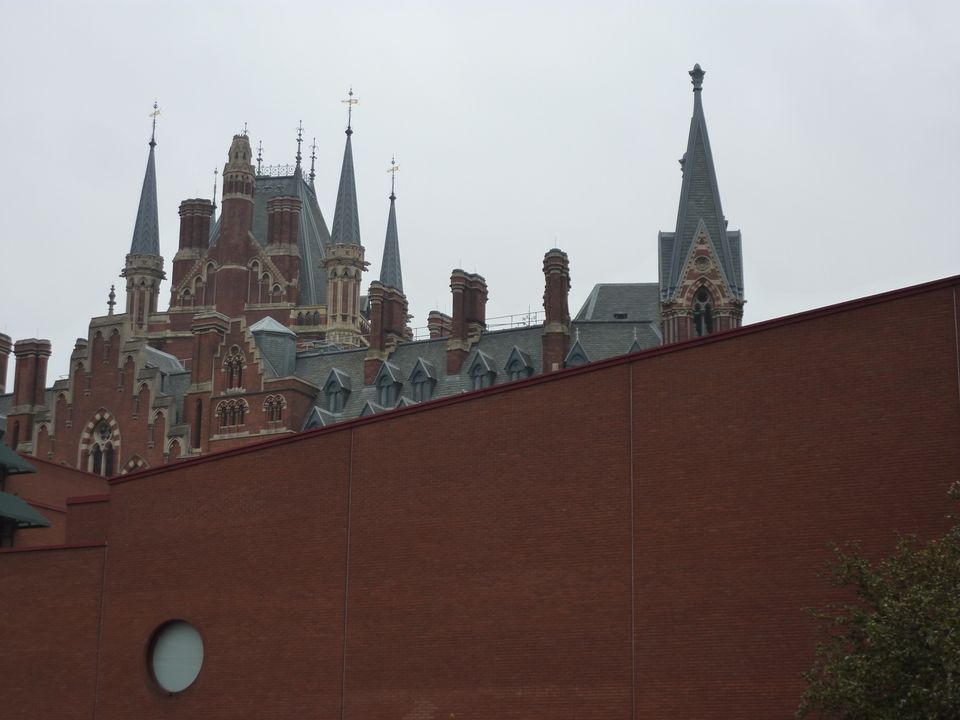
The British Library does not buy most of what it holds. Publishers are obliged by law to send it a copy of everything they print, and since 2013 to let it harvest what they put online. The rules go back four centuries.
Key points
- The Legal Deposit Libraries Act 2003 requires UK publishers to deliver a copy of every printed work to the British Library within one month of publication.
- Five other libraries may request copies: the Bodleian, Cambridge University Library, the national libraries of Scotland and Wales, and Trinity College Dublin.
- Legal deposit began in 1610 as an agreement between Sir Thomas Bodley and the Stationers' Company of London.
- The British Library's building at St Pancras, designed by Colin St John Wilson, was opened by the Queen in June 1998.
- Since 6 April 2013 the Non-Print Works Regulations have extended legal deposit to e-books, e-journals and the UK web domain.
Every book published in Britain ends up in the British Library because of legal deposit: under the Legal Deposit Libraries Act 2003, a publisher must deliver one copy of every printed book, pamphlet, magazine, newspaper, map and sheet of music to the British Library within one month of publication, free of charge.
Legal deposit is the rule that a publisher must give a copy of every work published in the country to a national library, so that a complete record of the nation's printed output survives. On request, publishers must also send copies to five other libraries: the Bodleian in Oxford, Cambridge University Library, the National Library of Scotland, the National Library of Wales and the Library of Trinity College Dublin, whose entitlement survived Irish independence.
Where did legal deposit come from?
The practice began as a private bargain. In 1610 Sir Thomas Bodley agreed with the Stationers' Company of London that its members would send a copy of every new book to his library at Oxford. The Licensing Act of 1662 made deposit a condition of the state's censorship regime, and after that Act lapsed, the Copyright Act of 1710 tied deposit to the new copyright, requiring nine copies for named libraries. The Copyright Act of 1911 settled the modern list of six and the British Museum Library's right to a copy of everything; the British Library inherited that right when it was created by the British Library Act 1972.
The building
The collection moved out of the British Museum's round reading room and its outstations to a purpose-built library beside St Pancras station, designed by Colin St John Wilson, which took more than twenty years to build and was opened by the Queen in June 1998. Its basements go down four storeys and hold the most heavily used part of a collection the library puts at more than 170 million items, with the rest in a storage site at Boston Spa in Yorkshire. A reader orders an item from the catalogue and it arrives in the reading room by automated conveyor. Admission to the reading rooms is free with a reader pass; the books do not leave the building.
Non-print works
The 2003 Act allowed the rule to be extended to electronic publications by regulation, and the Legal Deposit Libraries (Non-Print Works) Regulations 2013 did so from 6 April 2013. E-books, e-journals and other digital publications must now be deposited in digital form, and the libraries may harvest the UK web domain, which they do in an annual crawl of sites ending in .uk together with sites selected for their British content. Under the regulations the harvested material may be read only on terminals in the six libraries' reading rooms, one reader at a time per item, a restriction publishers negotiated to protect their sales.
What deposit does not do
Deposit is not registration and confers no copyright, which in the UK arises automatically. Nor is it a right to be published; the libraries take what is sent and pursue what is not. Publishers who fail to deposit can be ordered to by a magistrate and fined, though the libraries say most compliance comes from a standing arrangement with the Agency for the Legal Deposit Libraries, which collects on behalf of the five libraries other than the British Library.
Frequently asked questions
Do publishers have to send the British Library a copy of every book?
Yes. The Legal Deposit Libraries Act 2003 requires a publisher to deliver one copy of every printed book, pamphlet, magazine, newspaper, map and sheet of music to the British Library within one month of publication, free of charge. Five other libraries may ask for copies too.
Does legal deposit cover websites and e-books?
Yes, since the Legal Deposit Libraries (Non-Print Works) Regulations 2013 took effect on 6 April 2013. E-books and e-journals must be deposited in digital form, and the libraries harvest the UK web domain in an annual crawl. Harvested material can be read only on terminals in the six libraries' reading rooms.
Does depositing a book give it copyright?
No. Deposit is not registration and confers no copyright, which in the UK arises automatically. Nor is it a right to be published: the libraries take what is sent and pursue what is not.