
What the Baltic Dry Index measures: the daily price of moving iron ore, coal and grain by sea
A London shipbrokers' assessment, three ship sizes and a number that cannot be bought or sold
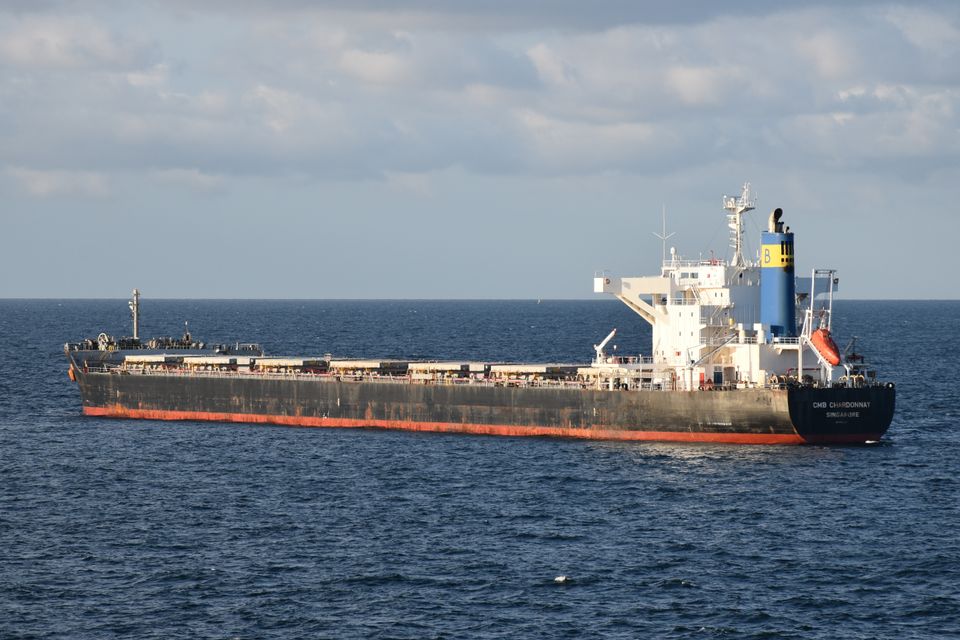
The Baltic Dry Index is published every working day from the rates shipbrokers report for chartering bulk carriers. It is watched as a gauge of world trade because it prices the raw materials that move before anything is made.
Key points
- The Baltic Exchange publishes the Baltic Dry Index each working day at 13:00 London time from assessments by a panel of shipbroking firms.
- Since 1 March 2018 the Baltic Dry Index has weighted Capesize 40 per cent, Panamax 30 per cent and Supramax 30 per cent.
- The Baltic Dry Index in its present form dates from 1 November 1999; its predecessor, the Baltic Freight Index, began on 4 January 1985.
- The index's highest close was 11,793 points on 20 May 2008; its lowest was 290 on 10 February 2016.
- The Baltic Exchange traces itself to a London coffee house of 1744 and was bought by the Singapore Exchange in 2016.
The Baltic Dry Index measures the daily cost of chartering the ships that carry dry bulk, cargo poured into a hold rather than packed in a box: iron ore, coal, grain, bauxite, fertiliser. The Baltic Exchange in London publishes it each working day as a composite of the charter rates that a panel of shipbroking firms reports for three sizes of bulk carrier.
The exchange describes the index as a benchmark for the cost of shipping dry bulk commodities by sea. Because these cargoes are the inputs of steelmaking, power generation and food, and because ship charters are priced daily, the index moves with demand for raw materials before that demand shows in factory output, which is why economists read it as a leading indicator.
Where does the number come from?
The Baltic Exchange traces itself to the Virginia and Baltick Coffee House in Threadneedle Street in 1744, where merchants and captains met to fix cargoes. It was owned by its members until 2016, when the Singapore Exchange bought it. It began publishing a freight index, the Baltic Freight Index, on 4 January 1985; the Baltic Dry Index in its present form dates from 1 November 1999. The exchange does not trade ships. Each day a panel of shipbroking firms reports its assessment of the charter rate on defined routes; the exchange averages the assessments, discards outliers under published rules, and publishes the result at 13:00 London time.
Three sizes of ship
The index is a composite of three of the exchange's own indices, each for a class of bulk carrier. Capesize ships, too large for the Panama Canal's old locks and named for the capes they round, carry mostly iron ore and coal on routes such as Brazil to China and Australia to China. Panamax vessels, sized to the canal, carry grain and coal. Supramax ships, smaller and fitted with their own cranes, serve ports without shore equipment. Since 1 March 2018 the exchange has weighted the composite 40 per cent Capesize, 30 per cent Panamax and 30 per cent Supramax; the earlier Handysize component was dropped. Each component is a time-charter average expressed in dollars per day, converted to index points by a multiplier the exchange publishes.
What it is not
The index is not a price anyone pays. A shipowner and a charterer agree their own rate; the index reports what such agreements are being made at. It cannot be bought, but Forward Freight Agreements settled against the Baltic indices are traded over the counter and cleared on exchanges, and the exchange's route assessments are the settlement prices for them. The index also says nothing about container shipping, the box trade for finished goods, for which other indices exist, or about tankers, which have their own Baltic indices for crude and product routes.
Its extremes
The index's own history shows why it is read with care. It reached its highest close, 11,793 points, on 20 May 2008, when Chinese ore imports met a shortage of ships; six months later it was below 700 as the financial crisis struck; on 10 February 2016 it closed at 290, its lowest level, with more new ships than cargo. A doubling of the index can mean surging trade or simply too few vessels; a halving can mean a slump or the delivery of an order book placed in better years.
Frequently asked questions
Can you invest in the Baltic Dry Index?
Not directly: the index is not a price anyone pays, and it cannot be bought. But Forward Freight Agreements settled against the Baltic indices are traded over the counter and cleared on exchanges, and the exchange's route assessments are their settlement prices.
Does the Baltic Dry Index cover container ships?
No. It covers dry bulk carriers only, the Capesize, Panamax and Supramax ships that carry cargo such as iron ore, coal and grain. Container shipping, the box trade in finished goods, and tankers have indices of their own.
Why is the Baltic Dry Index seen as a leading indicator?
Because it prices the raw materials that move before anything is made. Charters are agreed daily, so the index reflects demand for iron ore, coal and grain before it shows in factory output. A move can also reflect the number of ships available, which is why it is read with care.