
How the Suez Canal is run: an 1888 treaty, an Egyptian authority and 193 kilometres without a lock
Who may pass, who sets the tolls, and what the Ever Given taught about a single-lane waterway
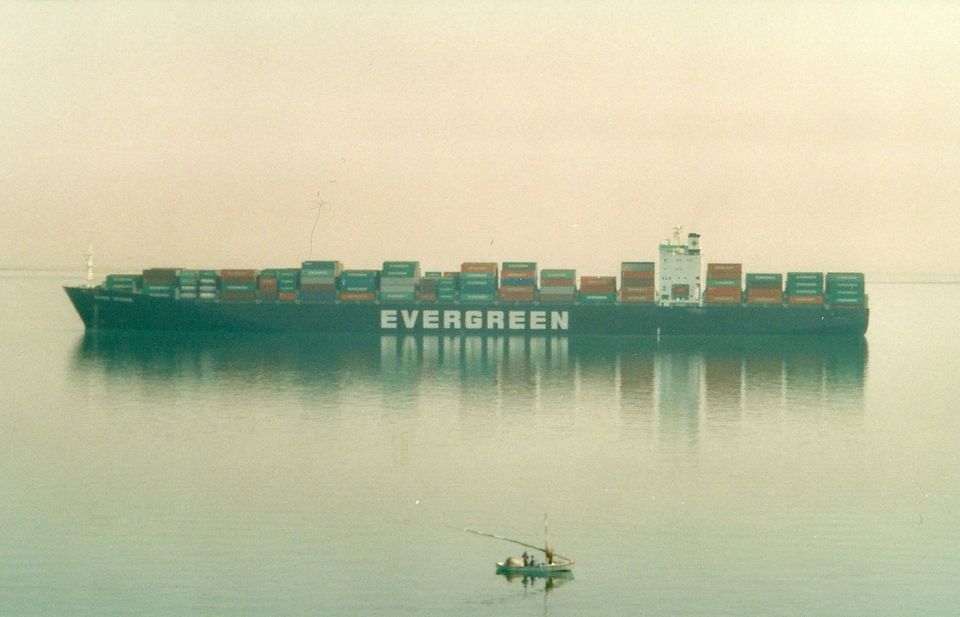
The canal between Port Said and Suez is a state authority's asset, a treaty's guarantee of free passage, and the shortest sea route between Europe and Asia. Its governance is older than most of the states whose ships use it.
Key points
- The Suez Canal is a lock-free, sea-level waterway of 193.30 kilometres between Port Said and Suez, opened on 17 November 1869.
- The Constantinople Convention of 29 October 1888 provides that the canal "shall always be free and open, in time of war as in time of peace".
- Egypt nationalised the canal company on 26 July 1956; the Suez Canal Authority's present statute is Law 30 of 1975.
- The New Suez Canal, opened on 6 August 2015, added a 35-kilometre parallel channel and 37 kilometres of deepening.
- The Ever Given blocked the canal from 23 to 29 March 2021, by which time more than 360 ships were queuing, by the authority's counts.
The Suez Canal is run by the Suez Canal Authority, the Egyptian public body that has operated it since the 1956 nationalisation and works under Law 30 of 1975: it sets the tolls, pilots every transit and keeps the channel dredged. The right of ships of every flag to pass rests on the Constantinople Convention of 1888.
The Suez Canal is a sea-level waterway of 193.30 kilometres, by the Suez Canal Authority's figure, joining the Mediterranean at Port Said to the Red Sea at Suez. It has no locks because the two seas are at nearly the same level. It opened on 17 November 1869 after ten years of digging by the Compagnie universelle du canal maritime de Suez, the concession company founded by Ferdinand de Lesseps under a grant from the Khedive of Egypt. The company's concession was to run ninety-nine years from the opening; it did not reach the date.
The treaty of 1888
The rule that the canal is open to everyone comes from the Constantinople Convention of 29 October 1888, signed by the major European powers and the Ottoman Empire. Its first article provides that the canal "shall always be free and open, in time of war as in time of peace, to every vessel of commerce or of war, without distinction of flag". Egypt reaffirmed the convention in a declaration to the United Nations in April 1957 after the 1956 crisis, and the convention remains the legal basis of passage today.
Who runs the canal today?
On 26 July 1956 President Gamal Abdel Nasser announced the nationalisation of the canal company, the act that triggered the invasion by Britain, France and Israel that autumn. The waterway has since been run by the Suez Canal Authority, an Egyptian public body whose present statute is Law 30 of 1975. The authority sets the tolls, publishes them in a circular with rates per Suez Canal Net Ton for each class of ship, pilots every transit with its own pilots, and keeps the channel dredged. Tolls are Egypt's largest source of foreign exchange after remittances and tourism; the authority reported revenue of US$9.4 billion for its financial year 2022/2023, a record.
The expansion of 2015
The canal was a single lane with passing bays for most of its life, which meant convoys: northbound and southbound ships waited their turn. On 6 August 2015 Egypt opened the New Suez Canal, a 35-kilometre parallel channel in the middle section and 37 kilometres of deepening elsewhere, which the authority says allows two-way transit along much of the route and cut waiting times. Tonnage records set since then are the authority's own.
The Ever Given
The waterway's fragility was shown on 23 March 2021 when the container ship Ever Given, 400 metres long, ran aground diagonally across the single-lane southern section in high winds and blocked the canal in both directions. It was refloated on 29 March by the authority's tugs and dredgers with Dutch salvage help, after a queue of more than 360 ships had formed at the two ends, according to the authority's daily counts. The ship was held under arrest in the Great Bitter Lake until a compensation settlement was signed in July 2021. Shipowners' alternative, the route round the Cape of Good Hope, adds roughly 3,500 nautical miles to a Rotterdam–Singapore voyage.
Frequently asked questions
Who owns and operates the Suez Canal?
Egypt. Since President Nasser nationalised the canal company on 26 July 1956, the waterway has been run by the Suez Canal Authority, a public body whose present statute is Law 30 of 1975. The authority sets the tolls, pilots every transit with its own pilots and keeps the channel dredged.
Why does the Suez Canal have no locks?
Because the Mediterranean and the Red Sea are at nearly the same level, the canal is a sea-level waterway. It runs 193.30 kilometres, by the Suez Canal Authority's figure, from Port Said to Suez.
What is the alternative route when the Suez Canal is closed?
Ships sail round the Cape of Good Hope, which adds roughly 3,500 nautical miles to a voyage between Rotterdam and Singapore. When the Ever Given blocked the canal in March 2021, a queue of more than 360 ships formed at its two ends.